
Volleyball Mania is reader-supported. When you buy through links on this page, we may earn a commission at no extra cost to you. As an Amazon Associate I earn from qualifying purchases.
The best volleyball shoes grip a gym floor, support quick side-to-side moves, and cushion hundreds of jumps a match. This guide picks seven current shoes by what they do best, then points you to the right shoe for your position, your feet and your budget.
How this guide was made: Volleyball Mania hasn’t wear-tested these shoes. The picks come from the makers’ specifications, retailer listings, and what players and coaches report. We link to every product so you can check the details, and we update the list when brands release new models.
Quick picks
| Pick | Best for | Why |
|---|---|---|
| ASICS Netburner Ballistic FF 4 | Best overall | Light, quick all-rounder for every position |
| Mizuno Wave Lightning Z8 | Fast all-court play; middles | Light, responsive Wave plate |
| Mizuno Wave Momentum 3 | Jumping; setters and liberos | Very light, with a springy forefoot |
| Nike React HyperSet 2 | Speed and versatility | React foam with Zoom Air in the forefoot |
| ASICS Sky Elite FF 3 | Competitive players | Premium jump cushioning and heel lockdown |
| ASICS Gel-Rocket 11 | Budget pick | GEL cushioning at an entry-level price |
| ASICS Upcourt 6 | Beginners | Light, simple and widely available |
The best volleyball shoes in 2026
1. ASICS Netburner Ballistic FF 4: best overall
Best for: players in any position who want one shoe that does everything well.
The fourth Netburner Ballistic is ASICS’s all-round court shoe, rebuilt to be lighter: FLYTEFOAM cushioning with a 15 mm heel drop, SPEEDTRUSS technology for quick starts and direction changes, and a no-sew, film-covered mesh upper. It’s a low-top; ASICS also makes a mid-top MT version.
- Good to know: the previous Netburner Ballistic FF 3 is still widely sold, often at a discount, and remains a solid buy.
- Want more ankle coverage? See volleyball shoes with ankle support.
2. Mizuno Wave Lightning Z8: fast and light
Best for: middle blockers and players who want quick, responsive shoes.
The Wave Lightning has been Mizuno’s flagship fast volleyball shoe for many generations. Mizuno’s Wave plate in the midsole spreads the impact of landing while staying responsive for the next jump.
3. Mizuno Wave Momentum 3: best for jumping
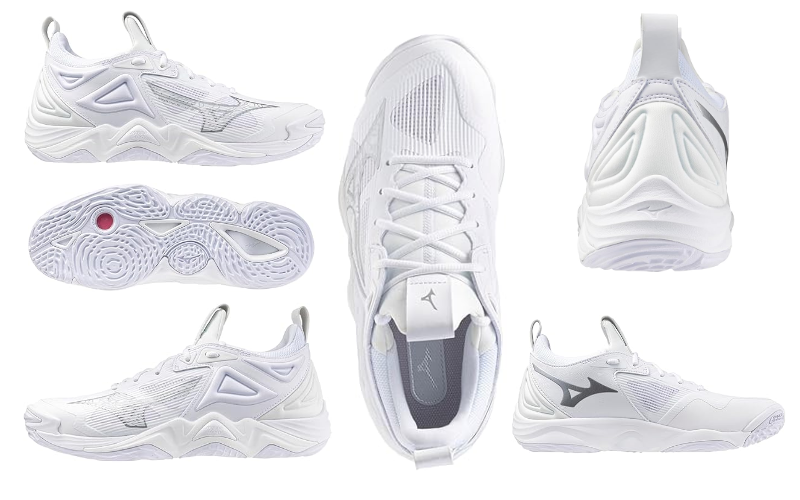
Best for: setters, liberos and anyone who wants the lightest feel.
The Momentum 3 pairs Mizuno’s Enerzy Core foam in the forefoot with a sock-like bootie upper. It’s among the lightest shoes here, which is why setters and liberos who move constantly tend to like it.
- For liberos, see our full guide to the best volleyball shoes for liberos.
4. Nike React HyperSet 2: speed and versatility
Best for: setters, liberos and outside hitters who move all over the court.
Nike combines soft React foam with a Zoom Air unit in the forefoot, plus a wavy outsole pattern for grip in every direction. Many players also use it as a light basketball shoe.
- More Nike options: best Nike shoes for volleyball.
5. ASICS Sky Elite FF 3: for competitive players
Best for: club and school players who jump a lot and want the most premium feel.
ASICS’s top jumping shoe uses FLYTEFOAM cushioning, a durable AHAR+ outsole and a mid-top collar with firm heel lockdown. It’s the most expensive shoe on this list.
- More ASICS options: best ASICS volleyball shoes.
6. ASICS Gel-Rocket 11: the budget pick
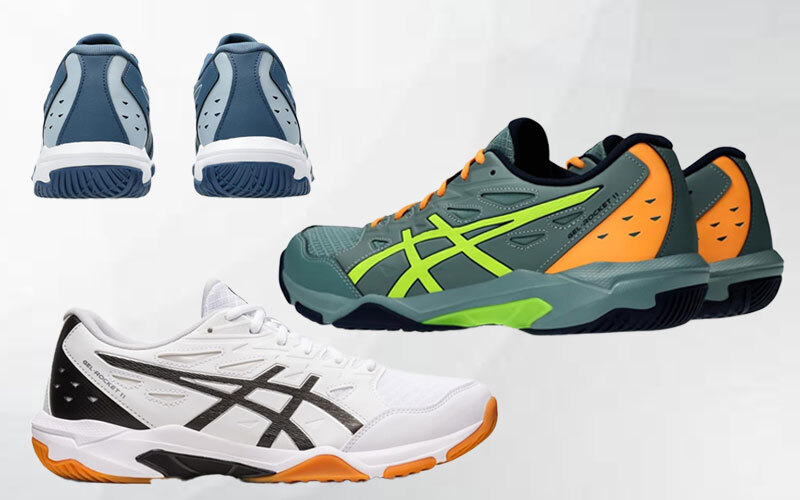
Best for: first club shoes, school teams and casual players.
The Gel-Rocket has been ASICS’s entry-level volleyball shoe for years, with GEL cushioning in the heel and a gum rubber outsole for grip. ASICS has since released the Gel-Rocket 12, so check which version you’re buying.
- Good to know: it runs narrow, so wide-footed players should look at our wide feet guide below.
- Other low-cost options: best cheap volleyball shoes.
7. ASICS Upcourt 6: for beginners
Best for: new players who need a light, simple court shoe.
The Upcourt is a light, low-cost indoor court shoe that comes in many colors. The men’s version uses a faux leather upper and the women’s a mesh upper.
Find the right shoe for your feet
| If you have… | Read |
|---|---|
| Wide feet | Best volleyball shoes for wide feet |
| Flat feet | Best volleyball shoes for flat feet |
| Weak or injured ankles | Best volleyball shoes with ankle support |
| A tight budget | Best cheap volleyball shoes |
| Outdoor or grass games | Best shoes for outdoor volleyball |
| Basketball shoes already | Best basketball shoes for volleyball |
Best volleyball shoes by position
| Position | What matters most | Our guide |
|---|---|---|
| Libero and defensive specialist | Low to the ground, light, grippy for quick lateral moves | Shoes for liberos |
| Setter | Quick footwork and stable landings | Shoes for setters |
| Middle blocker | Cushioning for constant jumping and lateral blocking | Shoes for middle blockers |
| Outside and opposite hitters | Jump cushioning plus support for the approach | See below |
Shoes for hitters
Outside and opposite hitters need two things: cushioning for repeated approach jumps and landings, and stability for the hard plant step before they jump. Look at the Netburner Ballistic FF 4 and the Sky Elite FF 3 above. If you jump a lot, see our guide to the best volleyball shoes for jumping.
Men’s and women’s volleyball shoes
Most volleyball shoes come in men’s and women’s versions with the same technology. The differences are sizing and width: women’s shoes are built on a narrower last. In US sizing, a women’s size is usually about 1.5 sizes larger than the same men’s size, so a men’s 8 is roughly a women’s 9.5. Check each brand’s size chart, and players with wider feet often find that men’s shoes fit better. For picks, women’s sizing and a conversion chart, see our guide to the best women’s volleyball shoes.
Volleyball shoe brands compared
| Brand | Known for | Popular models |
|---|---|---|
| Mizuno | Wave plate cushioning; light, responsive shoes | Wave Lightning Z8, Wave Momentum 3, Wave Stealth Neo 2 |
| ASICS | GEL and FLYTEFOAM cushioning; wide range from beginner to premium | Sky Elite FF 3, Netburner Ballistic FF 4, Gel-Rocket (ASICS guide) |
| Nike | React foam and Zoom Air; shoes that also work for basketball | React HyperSet 2, Zoom HyperAce (Nike guide) |
| adidas | Crazyflight jump shoes and value Ligra shoes for defenders | Crazyflight, Novaflight, Ligra 8 |
How to choose volleyball shoes
- Grip first. Look for a gum rubber, non-marking outsole made for indoor courts. Running shoes slip and don’t support side-to-side moves.
- Match cushioning to your role. Hitters and middles need jump cushioning; liberos and setters usually prefer a lighter, lower shoe with more court feel.
- Low, mid or high top. Mid-tops add some ankle support without much weight. If you’ve had ankle sprains, a brace usually protects more than a high-top alone.
- Fit snugly. Your heel shouldn’t lift when you move sideways, with about a thumb’s width of space at the toe.
- Keep them for the court. Wearing volleyball shoes outside wears down the grip quickly.
Frequently asked questions
Can you play volleyball in running shoes?
It’s not a good idea. Running shoes are built for forward motion and usually have soft, high soles that can roll on quick lateral moves, and their outsoles don’t grip gym floors as well.
Can you wear basketball shoes for volleyball?
Yes, many players do. Basketball shoes grip indoor courts and support lateral moves, though they’re often heavier. See the best basketball shoes for volleyball.
How often should you replace volleyball shoes?
When the outsole loses its grip or the cushioning feels flat. Players who train several times a week often need a new pair every season.
Should volleyball shoes be tight?
Snug but not tight: no heel lift when you move side to side, and no pressure on your toes when you land.