

Volleyball Mania is reader-supported. When you buy through links on this page, we may earn a commission at no extra cost to you. As an Amazon Associate I earn from qualifying purchases.
The best outdoor volleyball shoe depends on the surface. Grass needs grip that bites into turf, hard outdoor courts wear out soft indoor soles, and sand is best barefoot or in sand socks. This guide covers each one, with picks for grass.
How this guide was made: Volleyball Mania hasn’t wear-tested these shoes. The picks come from the makers’ specifications, retailer listings and published reviews. We link to every product so you can check the details.
Which shoe for which surface?
| Surface | What to wear | Why |
|---|---|---|
| Grass | Turf shoes or trail running shoes | Small rubber studs or lugs grip grass without the risks of cleats |
| Outdoor hard court (asphalt, concrete) | A durable court shoe, or an old pair of indoor shoes | Rough surfaces wear soft indoor outsoles down fast |
| Sand | Barefoot or sand socks | Shoes sink and trap sand; see the best beach volleyball socks |
Best shoes for grass volleyball
1. Salomon Speedcross 6: maximum grip
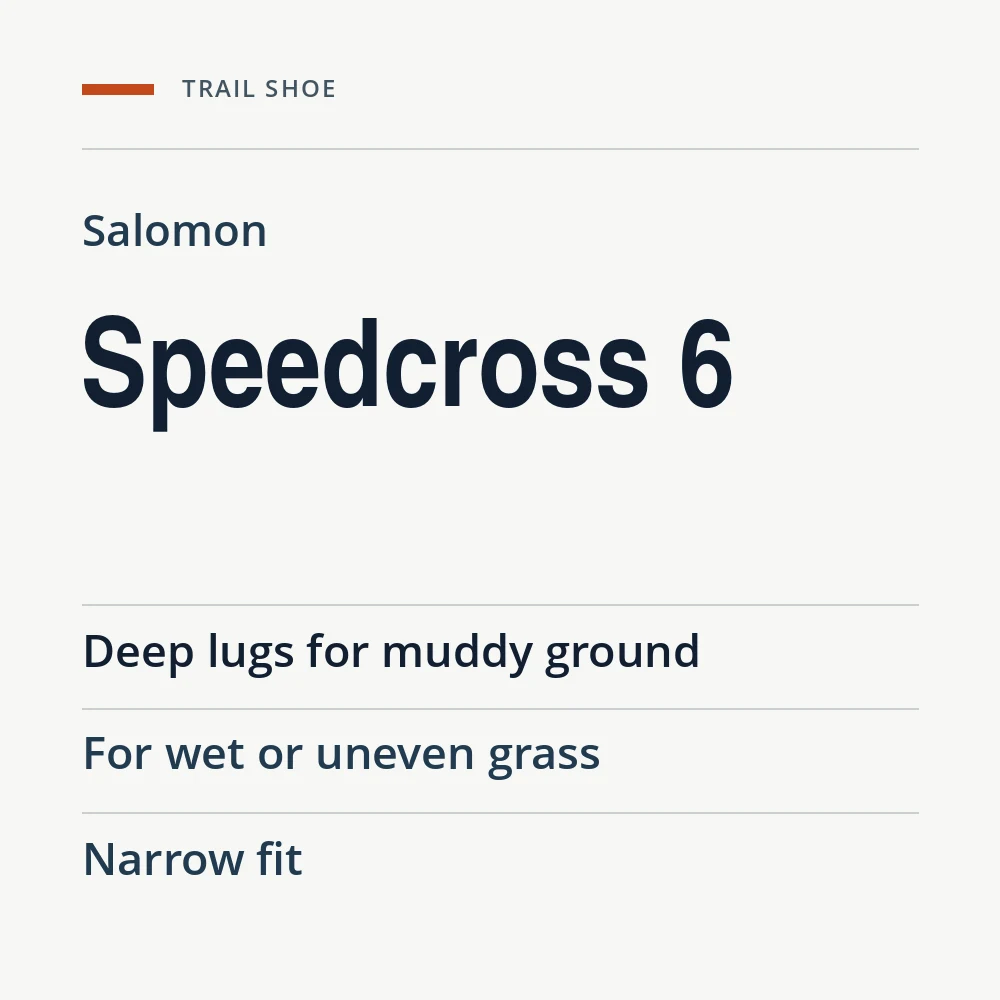
Best for: serious grass players, and wet or uneven fields.
A trail running shoe with deep, aggressive lugs that grip in mud and wet grass. Reviewers call it the best all-round grass option, though it’s one of the pricier picks.
- Good to know: it runs narrow, so wide-footed players should check sizing.
2. Boombah Viper Turf: best value
Best for: most grass players who want proper turf grip at a fair price.
A turf shoe with short rubber studs, about 4 mm, that grip dry and damp grass. It’s roughly half the price of the Salomon.
3. Saucony Excursion TR15: the budget pick
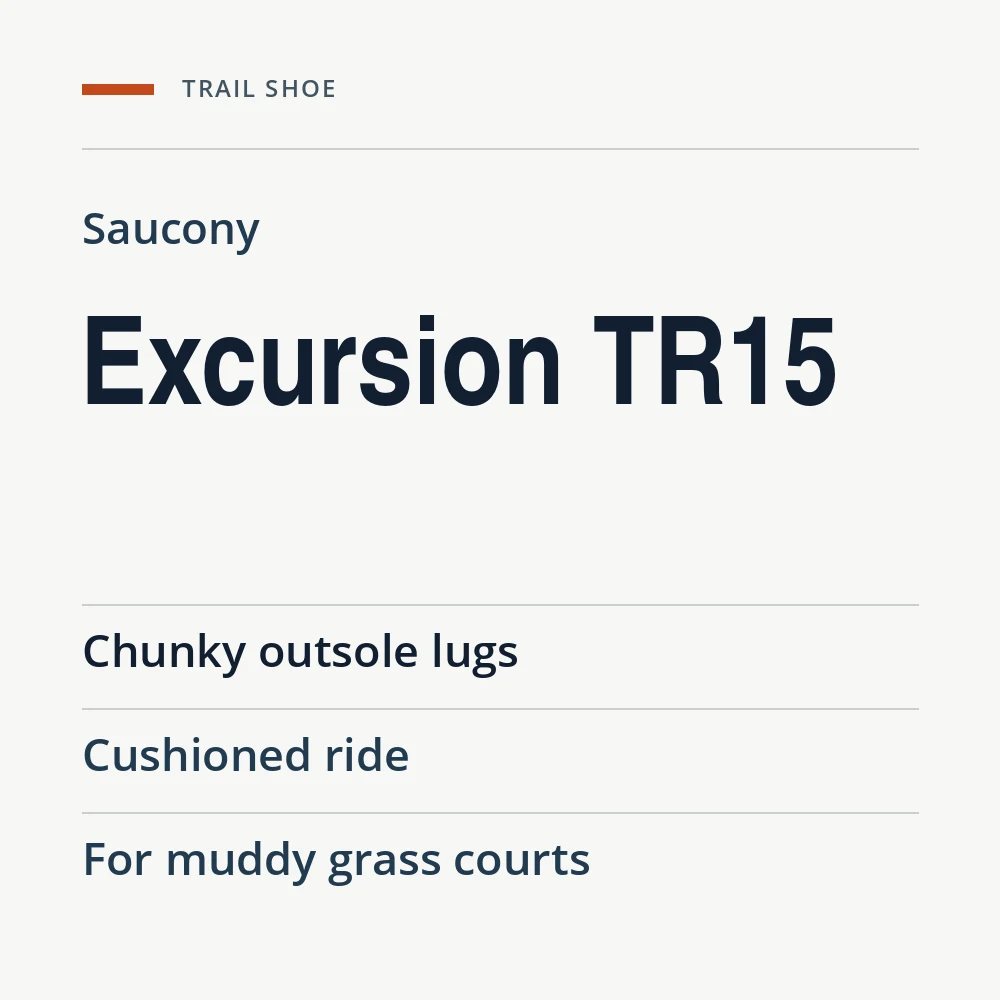
Best for: casual players and muddy parks.
A low-cost trail shoe with chunky lugs and enough cushioning for jumping.
- Consider something else if: you play on short, well-kept grass; the lugs may be more than you need.
4. New Balance Fresh Foam Velo V4 Turf: for women
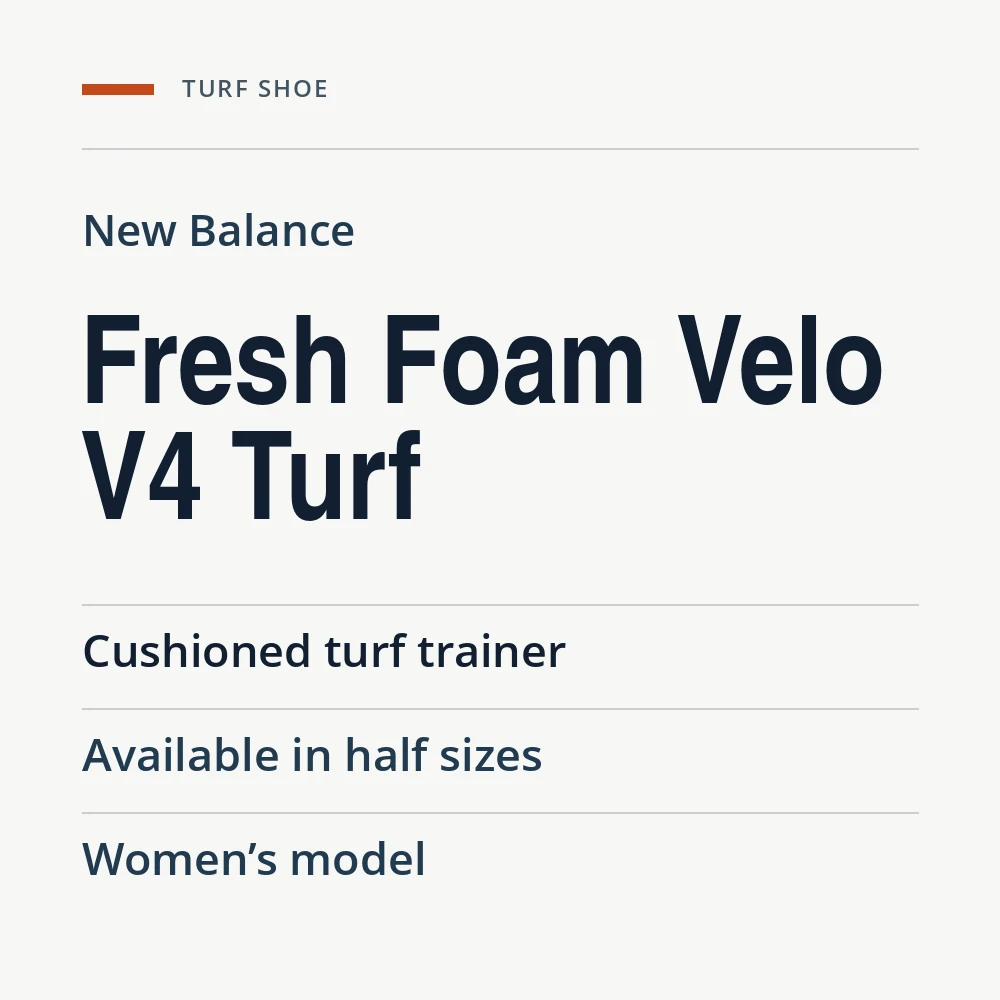
Best for: women who want a soft, cushioned turf shoe.
A cushioned turf trainer that comes in half sizes and many colors. Reviewers suggest going up half a size.
5. ASICS Gel-Rocket: if you mostly play indoors
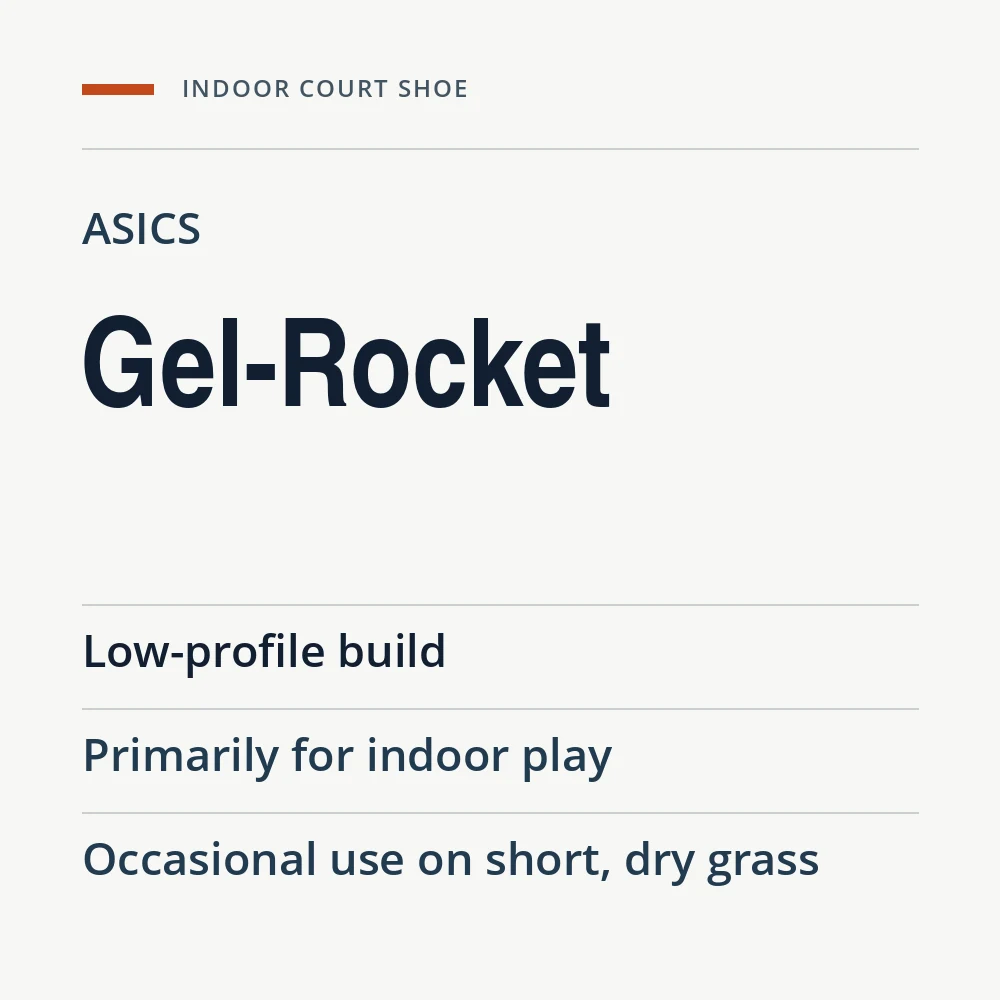
Best for: indoor players who play grass only now and then.
A low-profile indoor shoe that grips surprisingly well on dry, short grass. Serious grass players should choose a turf or trail shoe instead.
- More indoor options: best volleyball shoes.
Can you wear cleats for grass volleyball?
Usually not. Many grass tournaments don’t allow cleats, and some players avoid them anyway because studs that lock into the ground put more strain on knees and ankles when you jump and land. Check your event’s rules; turf shoes are the safe choice almost everywhere.
Shoes for outdoor hard courts
Playing on asphalt or concrete wears down the soft gum soles of indoor volleyball shoes quickly, and dirt and grit spoil their grip when you go back inside. The easy fix is to keep an old pair of indoor shoes for outdoor games. If you play outside often, a durable court shoe made for outdoor tennis or pickleball has a tougher outsole and holds up better.
Frequently asked questions
Can you wear volleyball shoes outside?
You can, but it wears down the outsole fast and the shoes lose grip indoors. Keep a separate pair for outdoor play.
What shoes are best for grass volleyball?
Turf shoes or trail running shoes. Both have rubber studs or lugs that grip grass and are allowed at most events.
Should you wear shoes for sand volleyball?
Most players go barefoot. If the sand is hot, cold or rough, sand socks protect your feet without sinking like shoes do.