

Volleyball Mania is reader-supported. When you buy through links on this page, we may earn a commission at no extra cost to you. As an Amazon Associate I earn from qualifying purchases.
The right volleyball knee pads depend on how often you hit the floor. Liberos and defensive specialists dive constantly and need the most padding; setters and middles can go lighter for freedom to move. This guide picks six pads by what they’re best for, then explains how to choose the padding, size and fit.
How this guide was made: Volleyball Mania hasn’t wear-tested these pads. The picks come from the makers’ specifications, size charts, retailer listings and player reviews. We link to every product so you can check the details yourself, and we’ll add our own measurements and photos as we buy and test pads.
Quick picks
| Pick | Best for | Padding |
|---|---|---|
| Mizuno LR6 | Liberos and defenders who dive a lot | VS-1 padding over the kneecap and both sides |
| Nike Streak | Most players; an all-round choice | Contoured foam pad, pull-on sleeve |
| Nike Essentials | Players who want a lighter, lower-profile pad | Low-profile, high-density foam |
| Under Armour knee pads | Hitters and all-round players who want firm protection | Dual-density 10 mm EVA foam (Armour 3.0) |
| Mueller multi-sport knee pads | Recreational players and multi-sport use | Foam pad; one size, sold as a pair |
| Bodyprox knee pads | Tight budgets and beginners | High-density molded foam; sold as a pair |
For kids, see our youth vs. adult knee pads guide. Liberos who want more options can read the best knee pads for liberos.
The six best volleyball knee pads
1. Mizuno LR6: most protection for diving
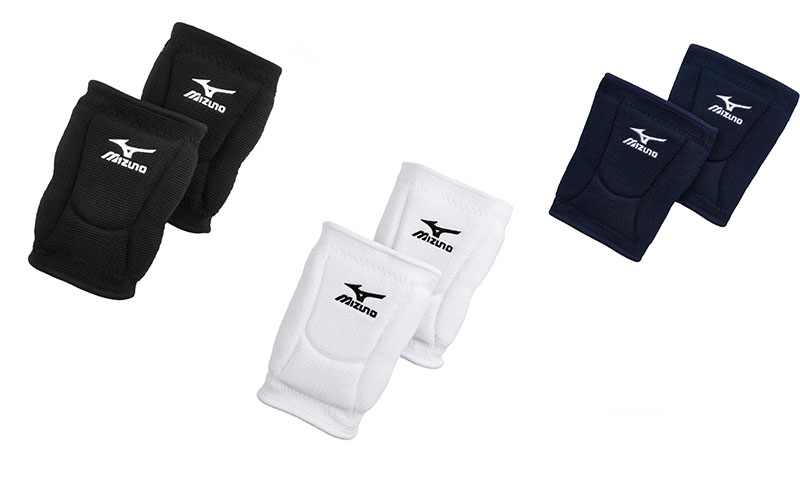
Best for: liberos, defensive specialists, and anyone who’s on the floor every rally.
Mizuno puts its VS-1 padding where knees hit the floor: over the kneecap and on both sides. The low-rise, no-fold design and 6-inch sleeve are meant to stay in place when you slide. Most big US sports retailers stock it.
- Good to know: the fabric is a polyester, elastic and rayon blend.
- Consider something else if: you’re a setter or middle who rarely dives; a lighter pad will feel less bulky.
2. Nike Streak: the all-round pick

Best for: most players, from beginners to club level.
The Streak is a pull-on pad with a contoured foam pad over the kneecap, sold in paired size brackets such as XS/S, M/L and XL/XXL, in black or white.
- Good to know: some buyers report the sizing runs off, so measure your knee and check Nike’s chart before ordering.
- Consider something else if: you dive constantly; the Mizuno LR6 covers more of the knee.
3. Nike Essentials: lighter and lower-profile
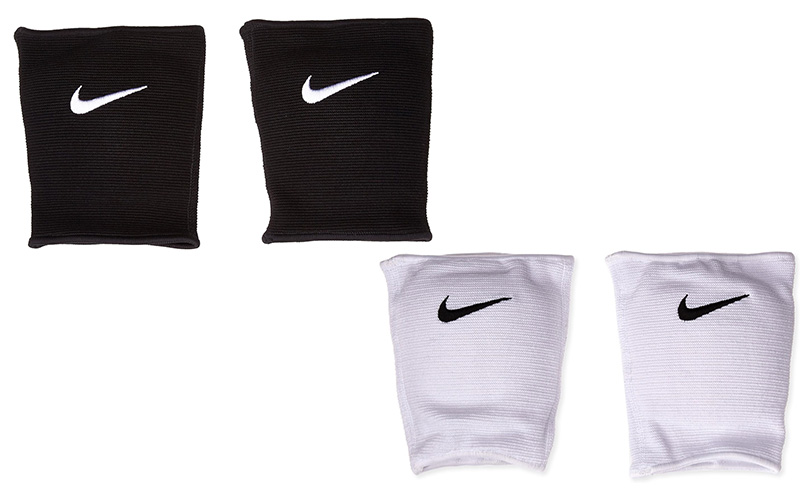
Best for: players who want protection without bulk, especially setters and middles.
Nike’s lower-priced pad uses low-profile, high-density foam inside a knit shell, with a Dri-FIT liner to manage sweat. It’s sold as a pair in XS/S, M/L and XL/XXL.
- Consider something else if: you need maximum protection; see the Mizuno LR6.
4. Under Armour knee pads: firm, hinged protection

Best for: hitters and all-round players who want firmer padding.
Under Armour’s current model, the Armour 3.0, uses dual-density 10 mm EVA foam in a hinged design meant to move with the knee. Under Armour sizes it by measuring the widest part of the knee, over the kneecap, with the leg bent to about 45 degrees.
- Good to know: at least one buyer says they run a bit small, so if you’re between sizes, size up.
- Check before buying: make sure the Amazon listing is the Armour 3.0, not an older model.
5. Mueller multi-sport knee pads: for more than volleyball
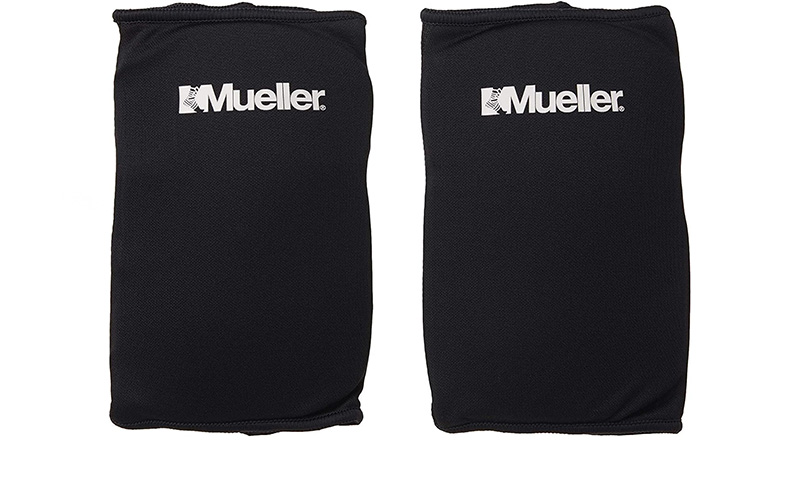
Best for: recreational players, and anyone who also wants pads for other sports.
Mueller makes these for protection against bumps, bruises and court burns. They come as a pair in one size, meant for knees measuring 18 to 20 inches around.
- Good to know: they contain natural rubber latex, so skip them if you have a latex allergy.
- Consider something else if: you play competitively, or your knees are outside the 18 to 20 inch range.
6. Bodyprox knee pads: the budget pick
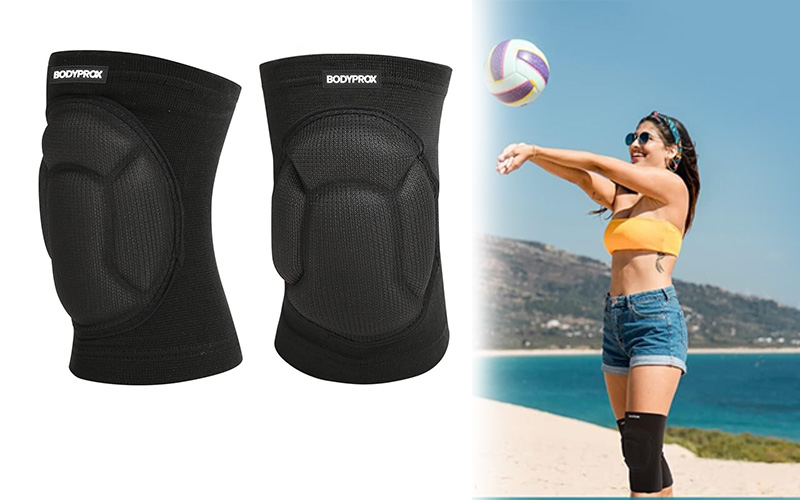
Best for: beginners, school PE, and trying the sport before spending more.
Bodyprox pads use high-density, contour-molded foam with anti-slip fabric meant to keep them in place when you sweat. They’re sold as a pair, in youth and adult versions.
- Good to know: check the listing’s age or size range carefully; the youth version lists conflicting age ranges.
- Consider something else if: you play several times a week; cheaper padding tends to flatten sooner.
How to choose volleyball knee pads
1. Match the padding to your position. How often you hit the floor decides how much padding you need.
| Position | How often you hit the floor | Padding to look for |
|---|---|---|
| Libero, defensive specialist | Constantly | Thick padding over the kneecap and both sides |
| Outside and opposite hitters | Often, in defense | Medium padding |
| Setter | Sometimes, chasing passes | Medium to light |
| Middle blocker | Least often | Light, low-profile |
| Beginner or recreational | Varies | Medium; comfort matters most |
2. Foam or gel. Most pads use foam, which is light and absorbs impact well. Gel pads add cushioning but can feel heavier. Thick “bubble” pads protect most; low-profile pads move best.
3. Get the size right. A pad that’s too loose slides down when you dive; one that’s too tight digs in behind the knee.
- Measure around your leg with a soft tape while standing, where the brand’s size chart says. Most measure around the middle of the knee, some just above it.
- Use that brand’s own chart, because sizes differ between brands.
- Between two sizes? Players who dive a lot usually choose the smaller size so the pad stays put.
- Trying them on? Bend into a ready position, lunge and crouch. The pad should stay centered on the kneecap without pinching behind the knee.
4. Check the sleeve and fabric. A longer sleeve stays in place better. Breathable, moisture-wicking fabric helps in long tournaments.
5. Pair or single? Some listings sell one pad, others a pair. Check before you compare prices.
Knee pads, knee sleeves or knee braces?
These three get mixed up, but they do different jobs:
| Type | What it does | Who needs it |
|---|---|---|
| Knee pads | Cushion the kneecap when you dive or land on the floor | Nearly every indoor player |
| Knee sleeves | Compression with little or no padding; keep the knee warm | Players who want support without bulk, or beach and grass players |
| Knee braces | Support the joint itself, often after an injury | Players recovering from or prone to knee injuries; ask a doctor or physio |
For more, see our guides to the best knee braces for volleyball and how to wear knee pads.
Frequently asked questions
Do you need knee pads for volleyball?
For indoor volleyball, yes. Diving and landing on a hard floor bruises knees quickly, and most clubs and school teams expect players to wear them. Beach players usually don’t, because sand is soft.
How tight should volleyball knee pads be?
Snug enough not to slide when you dive, but loose enough that they don’t pinch behind the knee or leave deep marks. If you have to keep pulling them up, they’re too big.
How do I measure for volleyball knee pads?
Stand up and wrap a soft tape around your leg at the point the brand’s size chart names, usually the middle of the knee, then compare with that brand’s chart.
How often should you replace volleyball knee pads?
Replace them when the padding feels flat over the kneecap, the elastic stops holding them in place, or the fabric tears. Players who train several times a week often need a new pair every season.
Can you wash volleyball knee pads?
Most can be hand-washed or machine-washed on a cold, gentle cycle and air-dried. Check the care label, and skip the dryer, which can break down the foam and elastic.