
Volleyball Mania is reader-supported. When you buy through links on this page, we may earn a commission at no extra cost to you. As an Amazon Associate I earn from qualifying purchases.
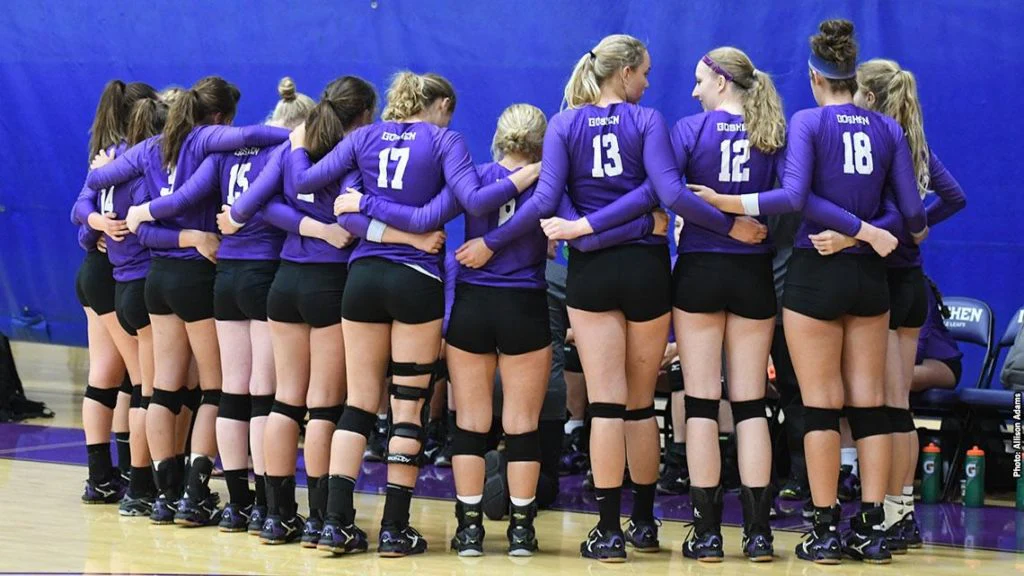
Volleyball players wear spandex, tight-fitting compression shorts, mainly for freedom of movement. The fabric stretches with every dive, lunge and jump without bunching up, riding, or restricting the hips the way looser shorts can. It also wicks sweat, resists tearing from floor contact, and keeps the uniform consistent across a team. Shorter, tighter shorts aren’t required by the rules, and more teams now offer longer or looser alternatives.
Why spandex, not sex appeal
It’s easy to assume the short, tight cut is about how the uniform looks, especially for women’s teams, and that question comes up a lot. But the material itself, elastane blended with another fiber, was adopted across many sports in the 1970s and 80s for the same practical reasons: it moves with the body instead of against it. Men’s volleyball uses the identical fabric in a longer, looser cut, which points to function rather than appearance driving the choice. See how the rest of a kit is put together in our guide to volleyball clothing.
How volleyball shorts got shorter: a short history
Volleyball started as a men’s sport in the 1890s; women didn’t widely compete until the 1950s, and organized high school and college programs followed in the 1970s. Early women’s uniforms used mid-length, fitted-but-not-tight shorts.
As spandex became cheap and common in the late 1970s, teams switched to tight, high-cut “bun hugger” shorts because the stretch fabric moved better during dives and sprints than woven cotton. Many teams went back to looser shorts in the late 1980s and early 1990s, then settled into the shorter, 2 to 4 inch inseam that’s standard on US women’s teams today. Some schools, often ones with a religious affiliation, still use longer, looser shorts.
What the rules actually say about length
| Uniform piece | FIVB rule | Notes |
|---|---|---|
| Women’s shorts | No fixed length is mandated; the brief, tight style is a team choice, not a requirement | Most elite and college teams choose a short, 2–4 inch inseam for mobility |
| Women’s alternative (shorts) | Hem no more than 26 cm (about 10 in) above the knee | An allowed looser option, not the default |
| Women’s alternative (leggings/trousers) | Hem no more than 3 cm (about 1.2 in) above the knee | Full-length tights, allowed at FIVB level and by most national federations |
| Men’s shorts | No fixed upper length; inseam shouldn’t reach more than about 10 cm above the kneecap | Typically a 5–7 inch inseam, looser fit than women’s |
The FIVB rulebook sets the outer limits; USA Volleyball, the NCAA and individual schools or clubs can and do set their own uniform policy inside those limits. If you’re unsure what your league allows, ask your coach rather than assuming the shortest option is required.
The real performance benefits
- Full range of motion. A four-way stretch fabric lets you drop into a dig, dive, and get back up without the shorts restricting the move.
- Nothing to grab or ride up. Loose fabric can bunch during a dive or get stepped on; a tight, worn-in compression short stays put.
- Moisture management. Spandex blends wick sweat to the surface so it evaporates, which matters over a long match. Combine with the right volleyball socks to keep your feet dry too.
- Durability on the floor. Knit spandex blends resist the kind of tearing that a hard dive or slide can put on woven cotton shorts.
- No bulky underlayers. Because they’re worn next to the skin, there’s nothing extra to shift or chafe underneath.
Downsides worth knowing
- Heat and sweat retention. Tight synthetic fabric sits close to the skin, which some players find hotter in a warm gym than a looser cut would feel.
- Fit is personal. The short, high cut isn’t comfortable for every body type or every player, and some find it restricts confidence rather than movement.
- Chafing and skin irritation are possible with any tight synthetic fabric that’s worn too long without washing, same as with running tights or cycling shorts. Washing after every use and sizing correctly largely avoids this.
- They wear out. The elastane loses stretch faster than cotton with repeated washing, so a season of heavy use can mean replacing them.
Claims that spandex itself is a health hazard mostly trace back to blog posts rather than sports-medicine sources; the fabric is widely used in activewear and medical compression garments. The genuine, well-documented downside is comfort and personal preference, not a safety risk.
Do you have to wear spandex?
No. The FIVB rulebook allows women to wear below-the-knee shorts or full-length leggings instead of the short, tight style, and USA Volleyball, most state high school associations and individual clubs can set their own policy. If short spandex isn’t comfortable for you, ask your coach what alternative uniform your league permits; religious, cultural and personal comfort reasons are common and widely accommodated at every level, from rec leagues up through the NCAA.
What to wear under volleyball shorts
Nothing extra is needed. Compression shorts are designed to be worn directly against the skin, the same as cycling or running shorts, so the fabric can wick sweat properly. Some players wear a thin, moisture-wicking liner for personal comfort or during a period, which doesn’t affect performance either way.
Choosing and sizing volleyball shorts
- Measure, don’t guess. Most brands size compression shorts by hip measurement rather than regular clothing size; check the specific chart for the brand you’re buying.
- Match your league’s rules. If your team or school requires a specific inseam, measure a pair you already wear before ordering.
- Pick a blend with some cotton or moisture-wicking treatment if heat and sweat retention bother you; pure nylon-spandex blends run warmer than blends with wicking finishes.
- Replace them once the stretch goes. If the waistband or leg openings feel loose instead of snug, the elastane has broken down.
| Best for | |
|---|---|
| Women’s volleyball compression shorts | Club, school and rec players needing team-style shorts in standard women’s sizing |
| Men’s volleyball compression shorts | Players who want a longer men’s-cut compression short |
Frequently asked questions
Why do volleyball players wear spandex?
Mainly for freedom of movement: the stretch fabric moves with dives, lunges and jumps without bunching, and it wicks sweat and resists tearing. It isn’t required by the rules; it’s the style most elite and college teams choose.
Is it mandatory to wear spandex in volleyball?
No. The FIVB rulebook and most national federations allow women to wear below-the-knee shorts or full-length leggings instead. See the rules table above, and our volleyball rules basics guide for more on uniform rules.
Why are men’s volleyball shorts longer than women’s?
It’s tradition and team choice rather than a rule difference; men’s shorts simply never shifted to the short, tight cut the way women’s did in the 1970s and 80s. The same stretch fabric is used in both.
Does spandex cause skin problems?
Any tight synthetic fabric can cause chafing or heat rash if it’s worn too long without washing, but there’s no good evidence spandex itself is harmful to wear. Washing after each use and choosing the right size avoids most issues.
Can you wear leggings instead of spandex shorts for volleyball?
Yes, at most levels. Full-length leggings are an approved alternative under FIVB rules and widely allowed by schools and clubs; check with your coach for your specific league.