

Volleyball Mania is reader-supported. When you buy through links on this page, we may earn a commission at no extra cost to you. As an Amazon Associate I earn from qualifying purchases.
Ankle sprains are the most common sudden injury in volleyball, and most of them happen at the net, when a blocker or hitter comes down on another player. The best ankle braces for volleyball stop the ankle rolling over without slowing you down. Here are six picks, which type of brace suits your position, and what the research says about whether braces work.
Quick answer: for most players, the ASO Ankle Stabilizer is the best all-round volleyball ankle brace. It’s a lace-up brace with figure-eight straps that works like a tape job and fits in most volleyball shoes. Middles, blockers and players coming back from a sprain should look at the Active Ankle T2 hinged brace. If you’ve sprained the same ankle several times, the Zamst A2-DX gives the most support.
How this guide was made: Volleyball Mania hasn’t wear-tested these braces. The picks come from the makers’ specifications, retailer listings and published research, and we link to every product and study so you can check the details. This isn’t medical advice: if you’ve hurt your ankle, ask a doctor, physical therapist or athletic trainer which brace suits your injury.
Quick picks
| Pick | Type | Best for |
|---|---|---|
| ASO Ankle Stabilizer | Lace-up with straps | Best overall, any position |
| Active Ankle T2 | Rigid hinged | Middles, blockers and front-row hitters |
| McDavid 195 | Lace-up with straps | Adjusting the fit without taking your shoe off |
| Zamst A1 | Low-profile strapped | Everyday protection with a light feel |
| Zamst A2-DX | Maximum support | Repeated sprains or a chronically weak ankle |
| Shock Doctor Ultra Wrap Lace | Lace-up with wrap | Medium support after a mild or moderate sprain |
Types of volleyball ankle braces
Volleyball ankle braces come in three main types. They all aim to stop the ankle rolling inward (inversion), which causes most sprains, but they trade protection against freedom of movement differently.
| Type | How it supports | Good for | Trade-offs |
|---|---|---|---|
| Lace-up with straps | Laces hold the brace snug; straps cross the ankle like athletic tape | All positions, especially back-row players and liberos | Laces can loosen during play and take a minute to put on |
| Rigid or hinged | A hard shell on each side of the ankle, with a hinge that lets the foot move up and down | Front-row players and anyone returning from a sprain | Bulkier; check it fits in your shoes |
| Sleeve or compression | Stretchy fabric that hugs the ankle | Warmth and comfort | Little real support, so it won’t do much to prevent sprains |
We left sleeves out of the picks for that reason. If you want a sleeve for comfort, wear it, but don’t count on it to stop a sprain.
Which ankle brace is best for your position?
Where you play changes the risk. In a video study of 24 ankle injuries at top FIVB tournaments, 21 happened at the net, and 15 of those came while blocking, as players landed on an opponent or a teammate. That’s why sports medicine staff often suggest different braces for front-row and back-row players.
| Position | What to look for | Picks to consider |
|---|---|---|
| Middle blocker | The most protection: you block every rotation in the front row | Active Ankle T2, Zamst A2-DX |
| Outside and opposite hitter | Strong support for landings after attacks and blocks | Active Ankle T2, ASO, Zamst A1 |
| Setter | Support plus mobility: you move constantly and block in the front row | ASO, McDavid 195 |
| Libero and defensive specialist | Light and flexible for quick lateral moves; you never block | ASO, Zamst A1, McDavid 195 |
The best ankle braces for volleyball
1. ASO Ankle Stabilizer: best overall
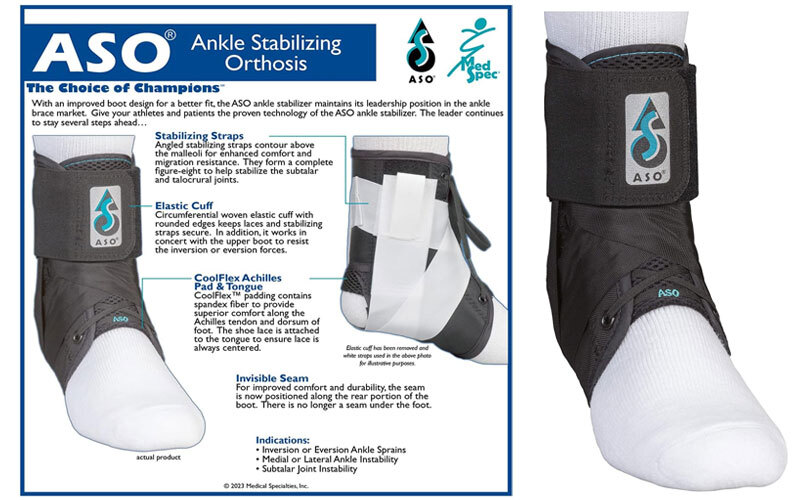
Best for: most players at any position, and anyone buying their first brace.
The ASO is one of the most widely worn volleyball ankle braces. It’s a lace-up boot made of ballistic nylon, with two stabilizing straps that wrap above the ankle bones in a figure eight, the same pattern an athletic trainer uses when taping an ankle. An elastic cuff holds the laces and straps in place, there’s padding at the Achilles and tongue, and the seam sits at the back so there’s nothing under your foot. It’s slim enough for most volleyball shoes and fits either foot.
- Sizing: ASO sizes by measuring around your heel and ankle, not by shoe size (for example, S is 11 to 12 inches and M is 12 to 13 inches). Check the size chart before you buy.
- Good to know: laces can loosen over a long match, so re-tighten between sets.
2. Active Ankle T2: best hinged brace for front-row players
Best for: middle blockers, front-row hitters and players coming back from a sprain.
The T2 is a rigid brace with a hard shell on each side of the ankle and a hinge that lets your foot flex up and down for jumping and landing while resisting the sideways roll that causes sprains. EVA foam padding lines the shell, and a single strap closes it, so it goes on quickly with low-top or high-top shoes. It fits either foot, and Active Ankle markets it specifically for volleyball. Training & Conditioning calls it the company’s most popular volleyball brace.
- Good to know: it’s bulkier than a lace-up brace, so try it in your volleyball shoes before a match. Sizes run S, M and L; check Active Ankle’s size chart.
3. McDavid 195: easiest to adjust mid-match
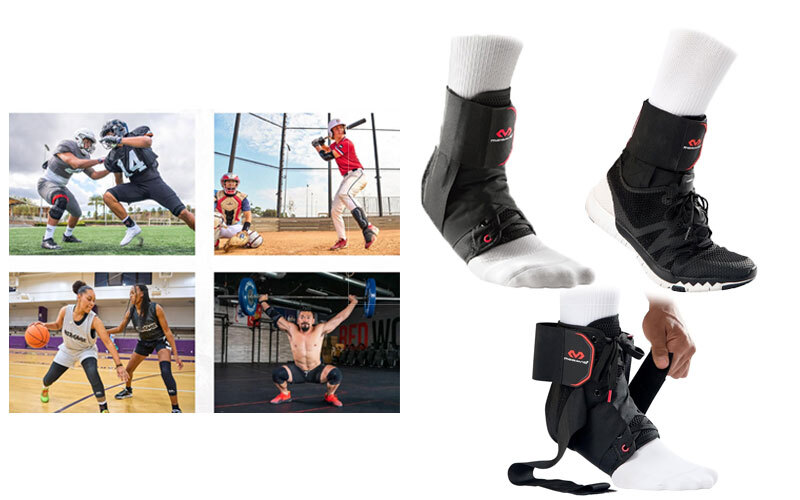
Best for: setters and back-row players who want lace-up support they can tweak quickly.
The 195 is a lace-up brace with two non-stretch “figure 6” straps that mimic athletic taping. The straps cover the laces, so you can tighten the fit without unlacing or taking your shoe off. A stretchy section at the Achilles lets your foot move forward freely, and it has a padded lining and a ventilated tongue. It fits either ankle, and McDavid lists volleyball among the sports it’s designed for.
- Sizing: McDavid sizes this brace by shoe size, from XS to XL. Some buyers say it runs large, so check the chart if you’re between sizes.
- Good to know: McDavid also makes the 199, a lighter lace-up brace without the straps, if you want less bulk and less support.
4. Zamst A1: light, low-profile protection
Best for: players who want real support without the bulk of a hinged brace.
The A1 slips on from the back and uses three adjustable straps and built-in stays to resist the ankle rolling inward on landings and turns. It’s built low-profile, so it sits easily in a volleyball shoe. Zamst makes separate left and right versions for a closer fit, and features volleyball players and coaches in its marketing for this brace. Zamst positions it for mild to moderate sprains and for prevention.
- Good to know: left and right versions can’t be swapped, so order the side you need (or one of each). Sizes run S to XL.
5. Zamst A2-DX: maximum support
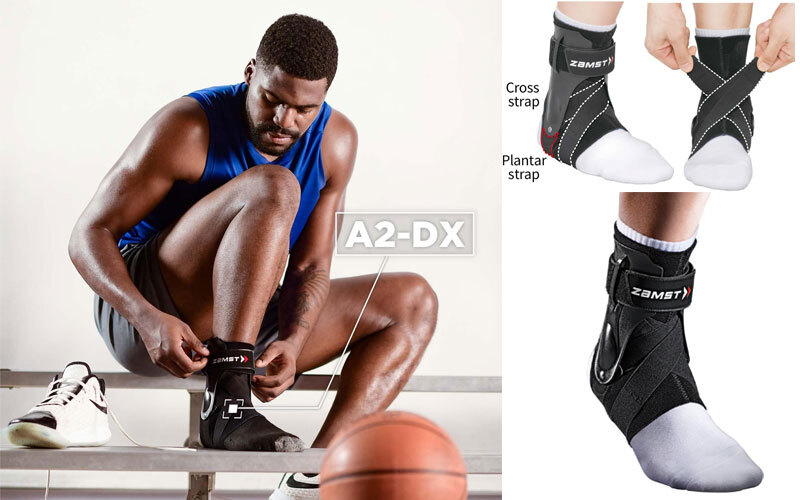
Best for: players who’ve sprained the same ankle repeatedly, or who have a chronically unstable ankle.
The A2-DX is Zamst’s highest-support ankle brace. Guards on both sides of the ankle limit rolling inward and outward, and a cross strap plus a strap under the foot work like a stirrup to lock the ankle in. Like the A1, it goes on from the back and comes in separate left and right versions, from S to XL. Zamst designs it for chronic instability and severe sprains, and buyers mention volleyball in their reviews.
- Good to know: it’s more brace than most players need. If you haven’t had a serious sprain, start with the ASO or Zamst A1.
6. Shock Doctor Ultra Wrap Lace: medium support with a wrap
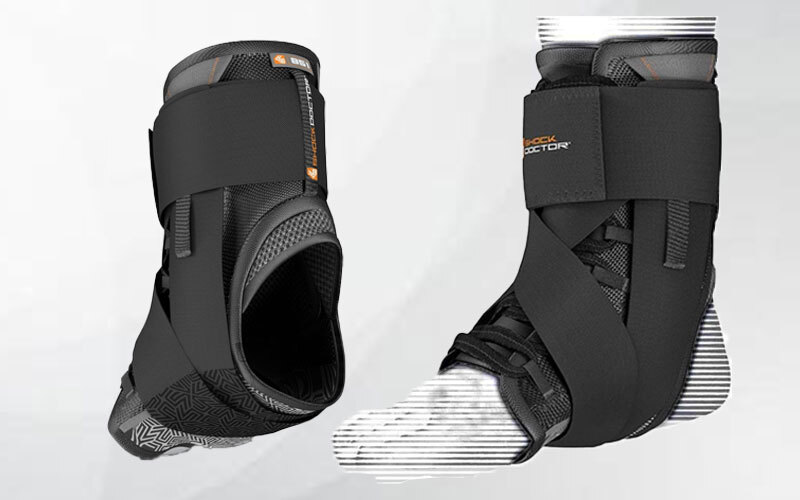
Best for: players returning from a mild or moderate sprain who want taping-style support.
This lace-up brace adds a multidirectional wrap strap that supports the ankle on both sides without tape. It has a pre-curved tongue, a contoured footbed with a non-slip silicone grip pattern, and antimicrobial, latex-free materials. Shock Doctor rates it Level 3, which it describes as medium stability and support for moderate to major sprains and unstable joints.
- Sizing: measure around your ankle 1 inch above the center of the ankle bone, then check Shock Doctor’s chart (S to XL).
Do ankle braces actually work for volleyball?
Yes, the evidence is good, especially when braces are combined with balance and strength training.
- Braces cut ankle injuries. In a University of Wisconsin study of 1,460 high school basketball players, the players who wore lace-up braces had 27 acute ankle injuries, compared with 78 among players who didn’t, roughly two-thirds fewer. Basketball is the closest sport to volleyball that’s been studied this way.
- Training cuts them too. The Oslo Sports Trauma Research Center found ankle sprains make up about half of sudden volleyball injuries. A program of landing technique and balance training roughly halved ankle sprains in Norway’s volleyball leagues.
- Braces don’t seem to hurt your jump. Most studies find lace-up and semi-rigid braces don’t reduce vertical jump height, although some find a small slowdown in quick changes of direction.
- High-top shoes alone aren’t enough. Evidence that high-tops prevent sprains is mixed, and Cleveland Clinic notes that ankle strength probably matters more than any shoe, brace or tape.
Pros and cons of ankle braces for volleyball
| Pros | Cons |
|---|---|
| Fewer ankle sprains, especially for players who’ve sprained before | Can slightly slow quick changes of direction |
| No need to tape before every practice | Adds bulk inside your shoe |
| Reusable for a season or more | Lace-up braces loosen and need re-tightening |
| Confidence when returning from an injury | Not a substitute for rehab and balance training |
How to size and wear an ankle brace
- Measure the way the brand says. Some brands size by ankle measurement and others by shoe size, so a medium in one brand isn’t a medium in another.
- Wear your playing socks. Put the brace on over the socks you play in, then your shoe.
- Snug, not tight. The brace should hold the ankle firmly without numbness, tingling or pinching.
- Try it in your volleyball shoes. You may need to loosen your shoe laces slightly to fit a hinged brace.
- Check it between sets. Re-tighten laces and straps; a loose brace protects less.
Your shoes matter too. A volleyball shoe with a stable, low sole is less likely to roll than a running shoe. See the best volleyball shoes with ankle support and our main volleyball shoe guide.
Frequently asked questions
What are volleyball ankle braces for?
They limit the ankle rolling over, which causes most sprains. Players wear them to prevent a first sprain, to protect an ankle they’ve sprained before, or to return to play after an injury.
Should volleyball players wear ankle braces?
Braces make the most sense for players who’ve sprained an ankle before and for front-row players who block. Some teams have every player wear them. Talk to your coach or athletic trainer about what your team does.
Do ankle braces weaken your ankles?
There’s no good evidence that wearing a brace weakens a healthy ankle. Doing balance and strengthening exercises as well is still a good idea, since training and bracing work best together.
Is a lace-up or hinged brace better for volleyball?
Lace-up braces are lighter and more flexible, which suits liberos, setters and back-row players. Hinged braces protect more against sideways rolls, which suits middles, blockers and players returning from a sprain.
Can you wear an ankle brace with volleyball shoes?
Yes. Most lace-up and low-profile braces fit in standard volleyball shoes. Hinged braces are bulkier, so you may need to loosen your laces.
Do ankle support shoes replace a brace?
No. Mid-top and high-top volleyball shoes feel more secure, but they don’t protect as reliably as a brace. If you’ve had a sprain, wear a brace whatever shoes you choose.
Should I wear ankle braces on both ankles?
Many players do, since either ankle can come down on another player at the net. If you’ve only sprained one ankle, ask your trainer whether to brace both.